Central Heating Repairs in Newcastle: Why Radiators Stay Cold and What to Check First
If you are searching for central heating repairs Newcastle homeowners can rely on, there is usually a specific problem in front of you: one radiator is cold, a room never warms up, or the heating seems to reach some parts of the house but not others. It is frustrating, especially when the boiler appears to be running.
At A.C.T Heating Ltd, we provide a practical, reliable service for homeowners and small commercial customers across Newcastle and the surrounding area from our base in South Shields. We carry out central heating repairs, boiler work and system cleaning, so we regularly see cold radiator problems that turn out to be anything from trapped air to circulation faults deeper in the system.
The good news is that a cold radiator does not automatically mean you need a new boiler. In many cases, a few sensible checks can tell you whether the issue looks minor, whether the system may need professional attention, and what details are worth sending us by WhatsApp or email before we arrange a repair assessment.
What a cold radiator usually tells you
If only one radiator is cold
When a single radiator stays cold while others are heating normally, the problem is often local to that radiator rather than the whole system.
Cold at the top and warmer at the bottom: trapped air is often the first thing to suspect.
Warm at the top but cold at the bottom: sludge or debris may be restricting flow.
Only one side warms up: the valve may be partly stuck or the system may need balancing.
Completely cold while others work: check whether the radiator valve has been turned down or seized.
Patterns matter. The more clearly you can describe what the radiator is doing, the easier it is to narrow down the likely cause.
If several radiators are struggling
When the problem affects multiple radiators, the cause is more often within the wider heating system.
Low pressure on a sealed system
Poor circulation from a pump or valve issue
Sludge build-up across older pipework and radiators
Controls that are not calling for heat properly
An underlying boiler fault affecting system performance
This is why symptom pattern matters. One cold radiator and a healthy system point in a different direction from a whole house that feels lukewarm.
Central heating repairs Newcastle: what to check first
Before you assume the worst, work through the safe basics. These checks can help you describe the fault more clearly and sometimes reveal a simple cause.
1. Check the thermostat and programmer
Make sure the heating is actually set to come on and that the room thermostat is calling for heat. If the schedule has changed, batteries are low, or the thermostat has been turned down, the system may appear faulty when the controls are the real issue.
Also note whether the hot water is working normally. If hot water is fine but radiators are not, that tells us something different from a full heating and hot water failure.
2. Check whether the radiator valves are open
It sounds obvious, but it is common. A thermostatic radiator valve can be turned down accidentally, especially in spare rooms, hallways or after decorating. On older radiators, the valve pin can also stick in the closed position.
If one radiator is cold, compare its valve settings with a radiator that is heating properly. If you do not know whether a valve is stuck, do not force it. That is the point to arrange a professional check.
3. Check the boiler pressure if your system has a gauge
Many sealed heating systems have a pressure gauge on the boiler or nearby pipework. If the pressure is much lower than normal, the system may not circulate properly and the boiler may even lock out.
If you are familiar with your boiler instructions, you may already know how to top the pressure up safely. If not, it is better not to guess. Pressure loss can be a symptom of a bigger issue, so repeated topping up is not a real fix.
4. Consider whether there may be air in the radiator
If the top of the radiator feels cold but the lower section is warmer, trapped air is a common cause. Bleeding the radiator can help, but only do this if you feel confident and know the correct process. Turn the heating off first, use the correct key, and stop once water begins to appear.
If the radiator needs bleeding frequently, that is worth investigating. Repeated air in the system can point to an ongoing circulation or pressure-related problem rather than a one-off nuisance.
5. Look for signs of sludge or poor circulation
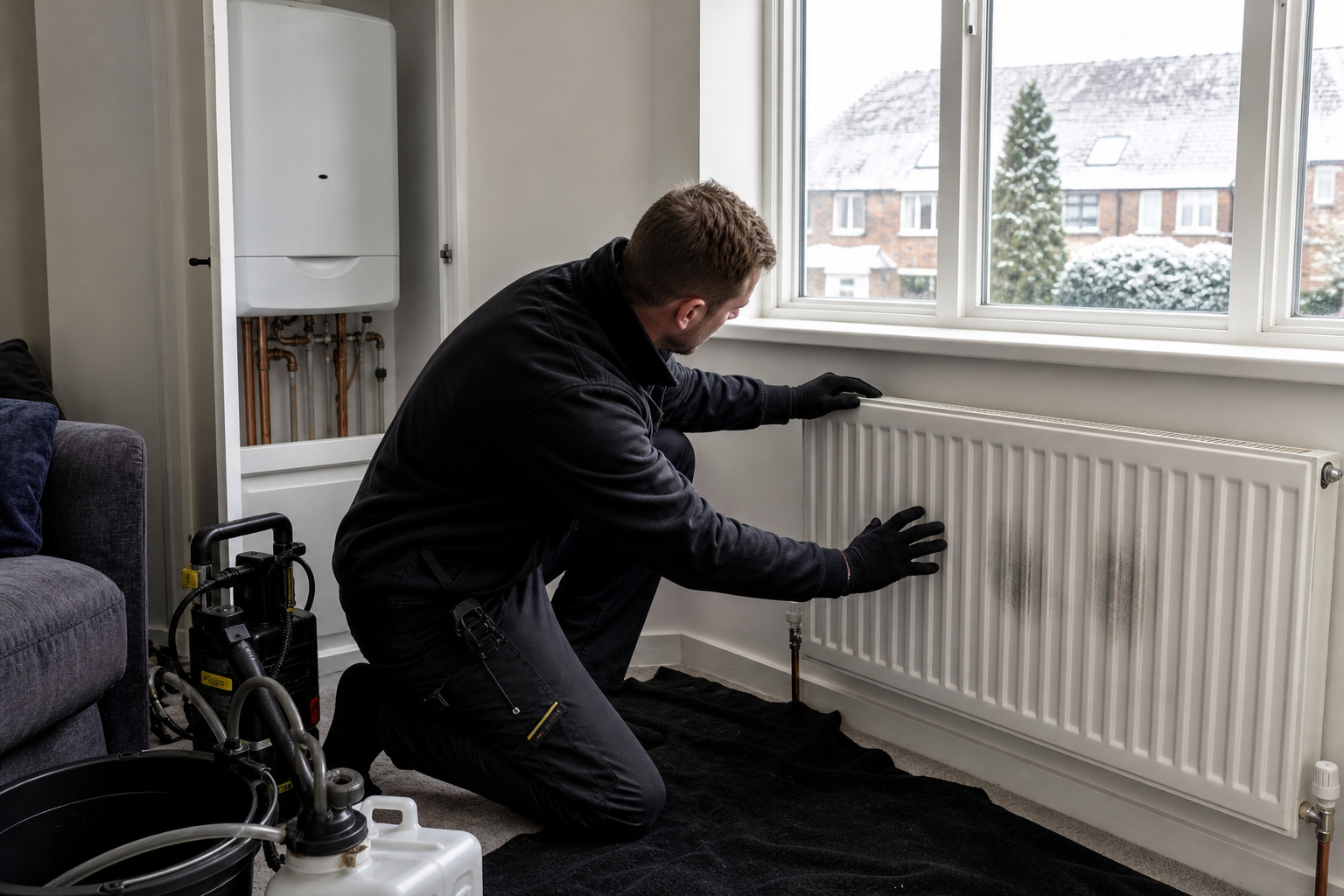
When radiators are cold at the bottom, take a long time to warm up, or some rooms never seem to get proper heat, sludge is a common suspect. Older systems can collect debris over time, which restricts flow and leaves parts of the system underperforming.
In that situation, repeatedly bleeding radiators or adjusting controls rarely solves the root problem. A proper assessment may show that power flushing is the more effective way to restore circulation and heating performance.
One important safety point: do not remove boiler casing or try to investigate gas, oil or electrical components yourself. Cold radiators can sometimes be linked to wider system faults, and those need the right diagnosis.
When cold radiators point to a bigger heating system fault
Pump, zone valve or circulation problems
If downstairs radiators are heating but upstairs are not, or one section of the property never seems to warm properly, circulation can be the issue. Depending on the system, the fault may involve a pump, a motorised valve, or another control component affecting how heat is distributed.
These faults are difficult to confirm just by looking at the radiator. That is why describing which rooms are affected, and whether the problem changes at different times of day, is useful when you contact us.
Balancing and older system issues
Sometimes the system works, but not evenly. Radiators nearest the boiler may heat quickly while those further away stay cool. This can happen when a system is poorly balanced or where older pipework and past alterations have affected flow.
Not every heating problem is a boiler problem. In plenty of cases, the boiler is doing its job but the heat is not being delivered around the property as it should.
Boiler faults that show up through radiator performance
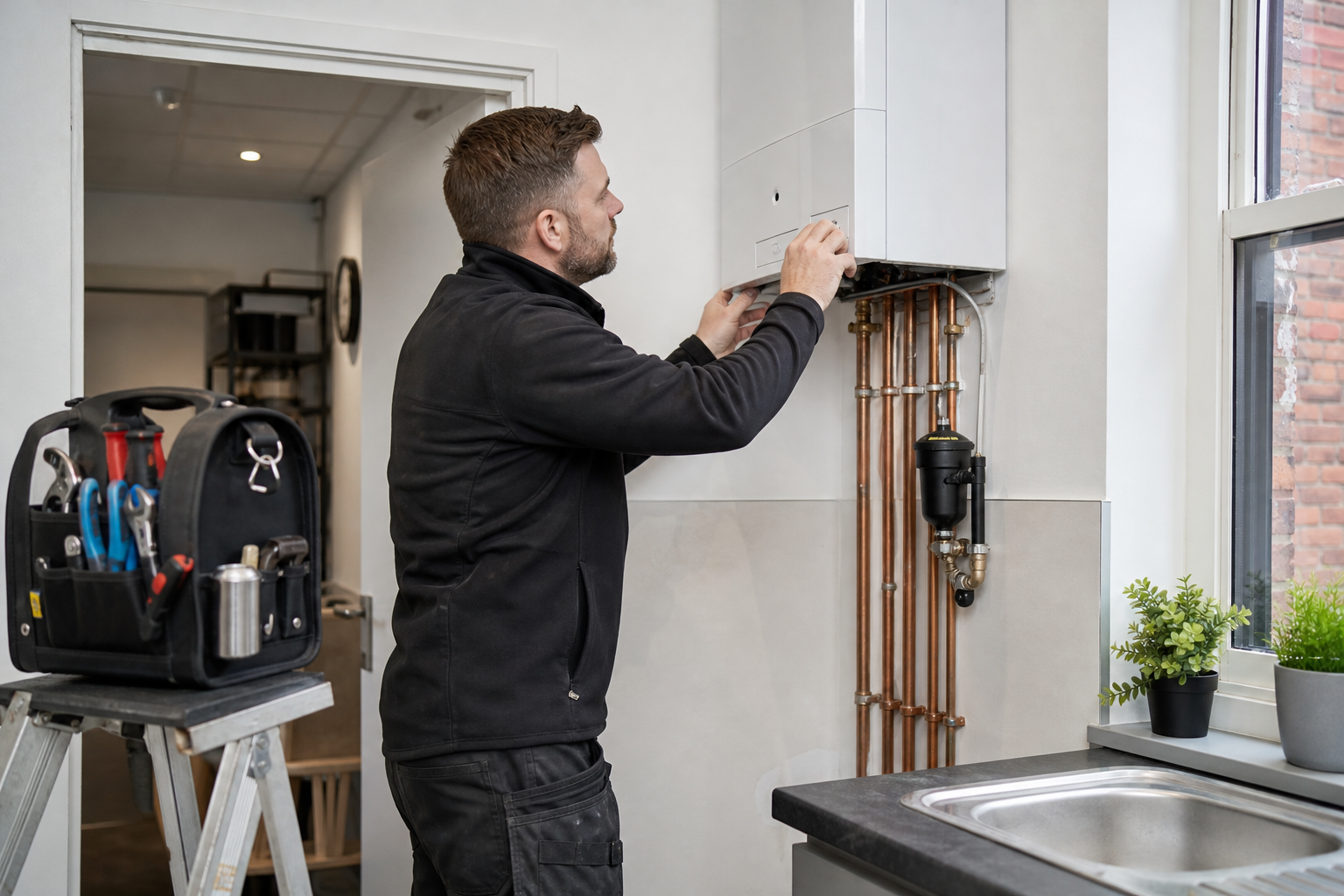
If the radiator issue comes with pressure loss, boiler lockouts, unusual noises or unreliable hot water, the radiator is only part of the story. A wider boiler service and repair assessment may be needed to understand why the system is underperforming.
Equally, not every recurring fault means you need a replacement. But if the heating system is ageing, repairs are becoming regular, and performance is poor across the property, it may be sensible to discuss boiler installations after the fault has been properly diagnosed.
Why A.C.T Heating Ltd is a sensible choice for diagnosis
With over 15 years of experience, we know that cold radiator complaints often sound similar at first but have very different causes. The value of a professional visit is not just turning up with tools. It is working through the symptoms properly, checking the wider heating system, and explaining the most practical next step in plain English.
We provide heating and plumbing support for homeowners and small commercial customers across Newcastle and the surrounding area from South Shields. That includes boiler work for gas, LPG and oil systems, central heating repairs, and wider system care where circulation and sludge are part of the problem.
Our approach is straightforward: clear communication, flexible booking, and advice based on what the system actually needs. Sometimes that is a targeted repair. Sometimes it is system cleaning. Sometimes it shows that a larger upgrade should at least be considered. What matters is diagnosing the problem honestly.
What to send us by WhatsApp or email before we assess the fault
If part of your heating system is not working properly, a few details upfront can help us understand the likely issue more quickly.
Which radiators are cold, and whether the problem is upstairs, downstairs or in one room
Whether the radiator is cold at the top, bottom, one side or all over
Whether the hot water is working normally
Any pressure reading shown on the boiler or system gauge
Any unusual noises, leaks or boiler lockout messages you have noticed
Your area, so we know whether you are in Newcastle, North Shields, Sunderland, Washington or nearby
We prefer quotes and bookings via WhatsApp and email, so sending the symptoms clearly is often the best first step. It helps us decide whether the issue sounds like a radiator fault, circulation problem, pressure issue or something wider within the heating system.
Frequently asked questions
Why is one radiator cold when the rest are hot?
If only one radiator is affected, the cause is often local to that radiator. Common reasons include trapped air, a turned-down or stuck valve, or sludge restricting flow. If the same radiator keeps having problems, it is worth getting the wider system checked.
Why is my radiator cold at the bottom but hot at the top?
That pattern often points to sludge or debris collecting in the radiator and reducing circulation. If more than one radiator shows the same symptom, the system may benefit from cleaning rather than repeated minor adjustments.
Can low boiler pressure cause cold radiators?
Yes, on sealed systems low pressure can affect circulation and cause poor heating performance or boiler lockouts. However, repeatedly topping the pressure up without finding the reason it dropped is only masking the issue.
How do I know if I need a repair or a power flush?
A single cold radiator may only need a local repair, but widespread cold spots, slow warm-up times and repeated sludge symptoms often suggest the whole system needs attention. The right answer depends on whether the fault is isolated or affecting circulation across the system.
Should I replace my boiler because some radiators stay cold?
Not necessarily. Cold radiators are often caused by air, valves, circulation problems or sludge rather than an immediate boiler failure. Replacement is usually a later conversation if the boiler is older, recurring faults are building up, and the wider system is no longer performing reliably.
Conclusion
Cold radiators are easy to ignore for a while, but they usually mean something in the heating system is not working as it should. The sooner you narrow down the symptoms, the easier it is to decide whether you are dealing with a simple radiator issue or a wider central heating fault.
If you need central heating repairs Newcastle homeowners and small businesses can trust, send A.C.T Heating Ltd the symptoms by WhatsApp or email and we can arrange a central heating repair assessment. From South Shields, we cover Newcastle and the surrounding area with practical, reliable support.