Power Flushing in Newcastle: 6 Signs Your Heating System May Need Cleaning
When your heating is switched on but rooms still take ages to warm up, the boiler is not always the only thing to blame. If you are searching for power flushing Newcastle homeowners can rely on, there is usually a reason behind it: cold spots on radiators, noisy pipework, dark water when bleeding a radiator, or a system that simply feels sluggish.
At A.C.T Heating Ltd, we provide practical, reliable heating and plumbing support across Newcastle and the surrounding area from our base in South Shields. We carry out power flushing services in Newcastle for homeowners and small commercial customers, alongside wider heating and plumbing work, so we regularly see systems where built-up sludge is quietly affecting performance.
The important point is this: not every heating fault needs a power flush. But when several circulation-related symptoms show up together, system cleaning may be the right next step. Below are six common signs to look out for.
What power flushing is and why it matters
Power flushing is a way of cleaning the inside of a wet central heating system to help remove sludge, rust deposits and circulating debris. Over time, contamination can collect in radiators, valves and pipework, making it harder for hot water to move around the system properly.
Whether your property uses a gas, LPG or oil boiler, the wider system still depends on good circulation. If the water quality inside the system is poor, heating can become uneven, noisy and slow to respond.
That said, power flushing is not a cure-all. A trapped air pocket, seized valve, faulty pump, control issue or boiler fault may still need repair. A proper assessment matters because the right solution depends on the pattern of symptoms, not just one isolated problem.
6 signs you may need power flushing in Newcastle
1. Your radiators are hot at the top but cold at the bottom
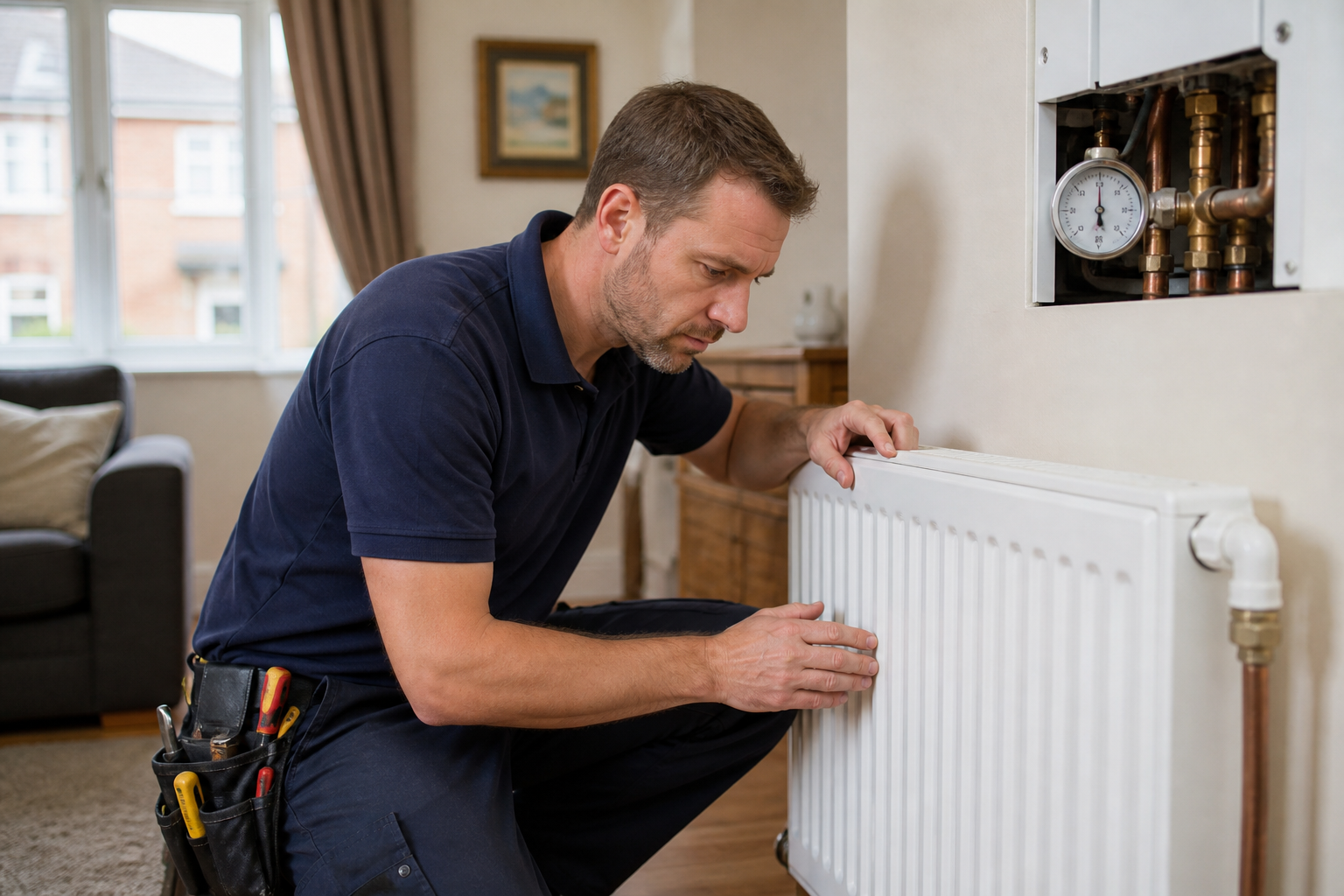
This is one of the clearest signs that sludge may be sitting in the lower part of a radiator. As debris settles, it can reduce the space available for hot water to circulate, leaving the bottom section noticeably cooler.
Likely pattern: warm or hot at the top, cooler or cold across the bottom.
What it may suggest: internal build-up rather than a simple air issue.
Why it matters: the radiator gives off less usable heat, so the room takes longer to warm.
By contrast, if a radiator is cold at the top, trapped air is often more likely. That is one reason diagnosis comes before recommending system cleaning.
2. Some rooms warm up much more slowly than others
If one or two radiators lag behind every day, that can sometimes point to a local valve or balancing issue. But if several radiators across the property are underperforming, restricted circulation in the wider system becomes more likely.
Homeowners often notice patterns such as these:
downstairs radiators taking far longer than upstairs ones
the farthest radiators never getting properly hot
rooms staying cool even when the heating has been on for a while
When heat distribution is inconsistent across the system, contamination is one possible cause worth investigating.
3. Your boiler, pump or pipework has become noisier
Gurgling, rumbling, knocking or constant pump noise can have more than one cause, but poor system water is something we consider when assessing heating performance. Dirty water and restricted circulation can make the system work less smoothly than it should.
If noise is combined with patchy radiator heat or slow warm-up times, it strengthens the case for looking at the condition of the whole system rather than focusing on one component alone.
Where the symptoms point to an appliance issue as well, we may recommend a combination of cleaning and boiler service and repair rather than assuming a flush on its own will solve everything.
4. You keep bleeding radiators and the water looks dirty
If you bleed a radiator and the released water appears dark, rusty or murky, that can be a sign of contamination circulating in the system. Repeatedly having to bleed radiators is also a clue that something in the system is not quite right.
On its own, bleeding may restore heat temporarily. But if the same problems return, it is sensible to look deeper.
Dark water: may indicate sludge or corrosion-related debris.
Frequent repeat issues: suggest the cause is not fully resolved.
Multiple affected radiators: make a wider system problem more likely.
5. The heating feels slow and sluggish across the whole property
A healthy system should respond in a reasonably consistent way when the heating comes on. If your home or premises now takes much longer to feel comfortable than it used to, poor circulation may be part of the reason.
Many people describe this as the system feeling tired. The boiler runs, some radiators get warm eventually, but the overall response is poor and the property never seems to heat as evenly as it once did.
That sluggishness can become more obvious in colder weather, first thing in the morning, or after the building has been empty for several hours.
6. You have repeat circulation-related heating problems
If radiators, valves or circulation issues keep coming back, it is worth considering whether the underlying problem is broader than a one-off repair. A system with ongoing contamination can keep producing the same practical symptoms: cold spots, uneven heat and recurring performance complaints.
This does not mean every repeat problem calls for power flushing. Sometimes a targeted central heating repair is the better answer. But when multiple signs point in the same direction, cleaning may be an important part of putting the system right.
When power flushing may not be the right answer
One of the biggest mistakes with heating problems is jumping straight to a solution before the fault has been properly assessed. We do not treat power flushing as a default answer for every cold radiator or noisy system.
In some cases, another issue is more likely, such as:
air trapped in an individual radiator
a stuck or seized radiator valve
a balancing problem
a pressure issue
a faulty pump, control or boiler component
If only one radiator is affected, the answer may be localised rather than system-wide. If several radiators are showing similar symptoms, dirty water is present and the system is generally slow or noisy, the case for cleaning becomes stronger.
That balanced approach matters. It helps avoid unnecessary work and makes sure the recommendation fits the actual problem.
How we assess whether your system may need cleaning
At A.C.T Heating Ltd, we take a practical view. With over 15 years experience, we look at the symptoms as a whole rather than assuming the same fix suits every property.
When customers in Newcastle and the surrounding area contact us about a possible flush, we will usually want to know:
which radiators are affected and how many
whether the cold areas are at the top, bottom or one side
how long the heating takes to warm the property
whether the boiler, pump or pipework has become noisy
whether you have noticed dark water when bleeding radiators
if there have been recent repairs, lockouts or recurring faults
Because we also handle wider heating and plumbing work, we can help you work out whether the issue points to system cleaning, a specific repair, or a broader heating problem that needs attention.
We work across Newcastle and the surrounding area from South Shields, including North Shields, Sunderland and Washington, providing support for homeowners and small commercial customers.
Think your system may be sludged up?
If your heating has cold spots, uneven performance, strange noise or slow warm-up times, it is worth getting the system assessed before the problem drags on. Left too long, minor circulation issues can keep affecting comfort and can lead to repeated call-outs for symptoms that never fully go away.
We provide a clear, reliable service and communicate flexibly to suit customers. If you think your system may benefit from cleaning, repair or further boiler checks, contact A.C.T Heating Ltd to arrange a heating system assessment.
Send us a WhatsApp message on 07894 517862 or email danlysaght36@gmail.com. You can also read more about our power flushing and heating services on our website.
FAQs about power flushing in Newcastle
Can power flushing fix cold spots on radiators?
It can help when cold spots are caused by sludge or debris inside the radiator. If the problem is trapped air, a faulty valve or poor balancing, another fix may be more appropriate.
How do I know if I need power flushing or a heating repair?
Look at the pattern. One cold radiator may point to a local issue. Multiple radiators with cold bottoms, slow warm-up times, dirty water and circulation noise are stronger signs that the wider system may need attention.
Is power flushing the same as bleeding a radiator?
No. Bleeding removes trapped air from an individual radiator. Power flushing is a deeper cleaning process used when contamination within the wider system may be affecting circulation and heat distribution.
Will every older heating system need a power flush?
No. Age on its own is not enough reason. The decision should be based on symptoms, system condition and whether contamination appears to be affecting performance.
Do you cover areas outside Newcastle?
Yes. We work across Newcastle and the surrounding area from South Shields, including North Shields, Sunderland and Washington.
Conclusion
If your heating system is noisy, patchy or slow to warm the property, sludge and poor water quality may be part of the problem. The key is not to guess. A proper assessment helps you understand whether the answer is a power flush, a repair, or a different heating fix altogether.
If you are looking for power flushing Newcastle customers can contact for practical advice and a clear next step, get in touch with A.C.T Heating Ltd by WhatsApp or email to arrange an assessment.